October 19, 2026
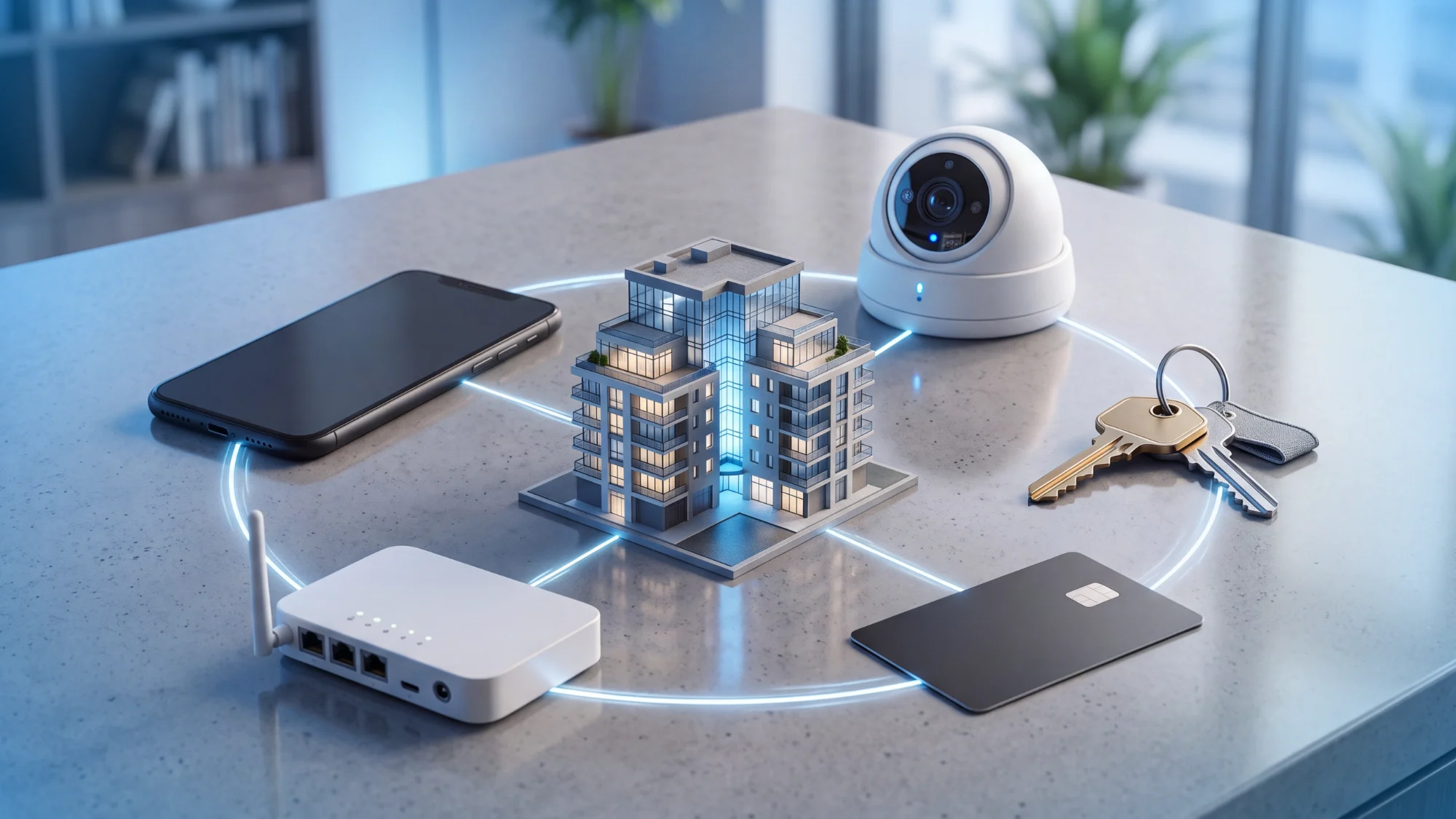
For property managers responsible for multiple buildings, managing who can enter different locations can become increasingly complex. Electronic access control can provide tools for managing credentials, permissions, schedules, and access activity across controlled entry points.
For property managers searching for “access control companies near me” in Southington, CT, Lynx Systems LLC provides access control solutions that can be configured according to a property’s security and operational requirements. Comparing management capabilities, scalability, compatibility, and support can help you determine which system is appropriate for your buildings.
Understanding Centralized Access Control Systems
Centralized access control systems can allow authorized administrators to manage multiple controlled entry points through a common management platform.
Depending on the system and configuration, property managers may be able to:
- Add, modify, or disable user credentials
- Assign access permissions to designated areas
- Establish access schedules
- Review recorded credential activity
- Manage multiple compatible access points
- Adjust permissions when tenants, employees, or contractors change
The ability to manage multiple buildings from one interface depends on the particular access control platform, network configuration, licensing, and compatibility of the installed equipment.
Key Considerations When Choosing Access Control Companies
When comparing “access control companies near me”, consider more than the credential technology or initial equipment cost.
Useful factors to evaluate include:
- Experience and Support: Ask about the provider’s experience with properties similar to yours and the support available after installation.
- Compatibility With Existing Infrastructure: Existing doors, locks, wiring, networks, and security equipment can influence system design.
- Range of Access Control Options: Determine which credential types, management platforms, and configurations are available.
- Support and Maintenance Services: Ask how service requests, troubleshooting, updates, and equipment problems are handled.
- Multi-Site Management: If you manage several properties, determine whether the proposed system supports centralized administration across those locations.
Evaluating Solution Scalability
Scalability can be especially important for property managers who expect to add buildings, doors, tenants, employees, or other authorized users.
Before selecting a system, ask:
- How many users can the system support?
- How many doors or locations can be managed?
- Can additional access points be added?
- Are additional controllers or licenses required?
- Can administrators manage multiple properties?
- What happens if the organization outgrows the current configuration?
Some systems can be expanded, but expansion may require additional hardware, software, licenses, wiring, or other infrastructure. Ask about these requirements before assuming a system can grow without modification.
Comparing Access Control Options
Different facilities may benefit from different credential and management technologies.
When comparing access control options, consider:
- Biometric vs. Card-Based Systems: Certain applications may use biometric credentials, while others rely on cards, fobs, mobile credentials, keypads, or combinations of these technologies.
- On-Premises vs. Cloud-Based Management: Depending on the platform, access control software may be managed locally or through a hosted/cloud-based service.
- User Permissions: Compatible systems may allow administrators to assign different permissions according to user, location, door, or schedule.
- Mobile Credentials: Some systems may allow smartphones or mobile applications to serve as credentials.
- Activity Records: Certain platforms maintain records of credential activity that administrators can review.
Features vary among manufacturers and systems, so property managers should confirm that the proposed configuration supports the capabilities they actually need.
Benefits of Partnering with Local Experts
Working with a local access control provider can make it easier to arrange on-site evaluations and discuss the specific requirements of your buildings.
For property managers in and around Southington, working with Lynx Systems LLC provides access to a Connecticut-based security provider that can evaluate site conditions and discuss available access control options.
When evaluating local providers, consider factors such as:
- Experience with similar facilities
- Availability of on-site assessments
- Supported access control technologies
- Installation capabilities
- Service and maintenance options
- Communication and support procedures
Being local does not automatically guarantee faster response times or a better system, so ask each provider about actual service availability and support procedures.
Integrating Access Control with Building Management Systems
Integration capabilities are another consideration for multi-building properties.
Depending on the products involved, access control may integrate with compatible systems such as:
- Video surveillance
- Intrusion detection
- Intercom systems
- Visitor-management platforms
- Other supported security technologies
Broader integration with HVAC, lighting, or building automation platforms may be possible with certain products, but it should not be assumed.
Compatibility depends on the manufacturers, software platforms, interfaces, system architecture, and configuration involved. Ask the access control provider to verify integration requirements before purchasing equipment.
FAQs About Access Control Companies
1. What are access control systems?
Access control systems are designed to manage authorized entry to controlled doors or areas.
Depending on the system, administrators may be able to manage credentials, establish permissions and schedules, and review certain access activity.
2. Can access control be integrated with other security systems?
Some access control systems can integrate with compatible video surveillance, intrusion detection, intercom, visitor-management, or other security technologies.
Integration is not universal, so compatibility should be verified for the specific products involved.
3. How do I maintain my access control system?
Maintenance requirements vary by system.
Depending on the equipment, maintenance may include inspecting door hardware, replacing batteries where applicable, managing credentials, applying manufacturer-recommended software or firmware updates, and servicing components that are no longer operating correctly.
Ask your provider which maintenance requirements apply to your particular installation.
4. What is the cost of installing an access control system?
Costs vary according to factors such as:
- Number of controlled entry points
- Credential technology
- Electronic locking hardware
- Controllers and readers
- Wiring and network requirements
- Software and licensing
- Integration requirements
- Installation complexity
- Ongoing support or hosted services
A site evaluation can help determine what equipment and installation work are required before an accurate estimate is prepared.
5. Are there energy-efficient access control options?
Energy use varies according to the access control hardware, locking technology, power supplies, network equipment, and other components involved.
If energy consumption is a priority, ask providers about the power requirements and efficiency characteristics of the specific equipment being considered rather than assuming all modern access control systems include energy-saving features.
Contact Lynx Systems LLC Today
Managing access across multiple buildings requires careful consideration of credentials, permissions, controlled doors, system capacity, integrations, and ongoing administration.
If you’re comparing “access control companies near me” in Southington, CT, contact Lynx Systems LLC to discuss your properties, existing infrastructure, and access management requirements, and explore an access control configuration suited to your needs.